Every ringing phone is a potential customer. When nobody picks up, many callers won’t leave a voicemail. They simply call the next business on the list. For clinics, salons, home service companies, law firms and agencies, a missed call is often a lost booking.
Hiring enough people to answer every call, at every hour, is expensive. AI voice agents offer another way. They answer instantly, hold natural conversations, and book appointments straight into your calendar, any time of day. This guide explains how they work, what they can handle, where they fit best, and how to set one up well.
What Is an AI Voice Agent?
An AI voice agent is software that talks to callers the way a person would. It listens to speech, understands what the caller wants, responds in a natural-sounding voice, and takes real actions in your systems, such as checking availability or creating a booking.
This is very different from the old “Press 1 for sales, press 2 for support” phone menus. Those systems force callers through rigid options. A voice agent lets people simply say what they need in their own words: “I’d like to see someone about a sore tooth on Thursday morning.”
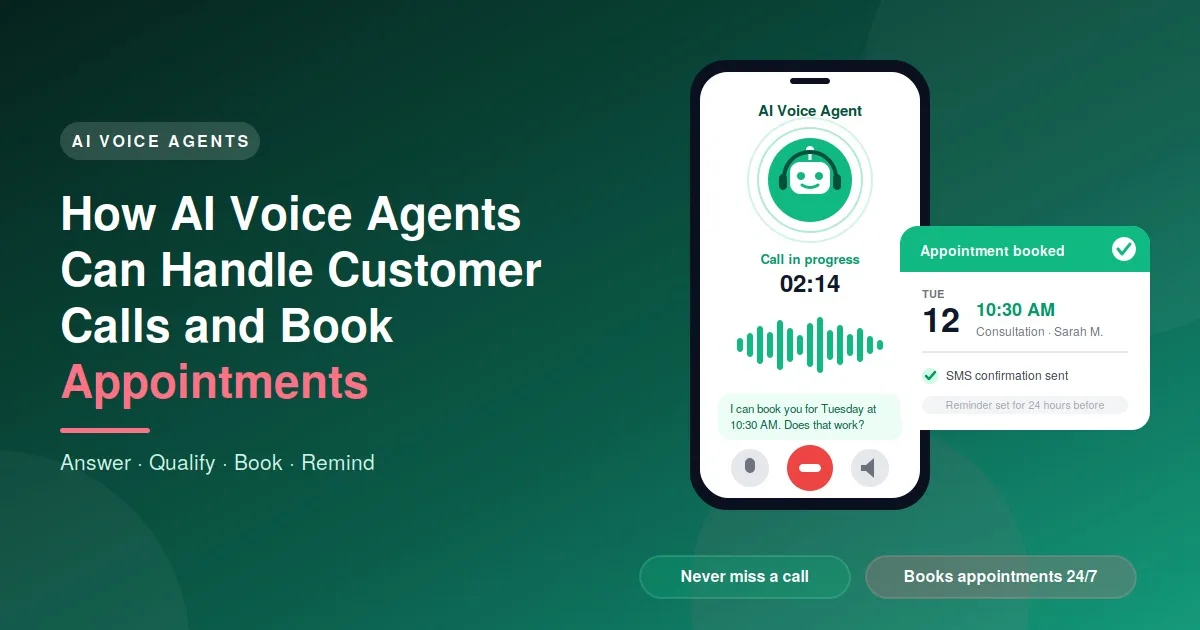
How an AI Voice Agent Handles a Call
Behind a smooth conversation, several steps happen in a few seconds:
- It answers instantly. The call is picked up on the first ring, with a greeting in your brand’s tone.
- It understands the request. Speech recognition turns the caller’s words into text, and AI works out what they want, even if they ramble, interrupt or change their mind.
- It gathers the details. The agent asks for the information it needs, such as name, phone number, service required and preferred time.
- It checks your systems. It looks at your live calendar, CRM or booking software to see what’s actually available.
- It books the appointment. The agent confirms the slot with the caller and writes it into your calendar.
- It sends confirmation. The caller receives a text or email, followed by a reminder before the appointment.
- It hands over when needed. If the call is complex, urgent or emotional, the agent transfers it to a person and passes along a summary.
What Customer Calls Can an AI Voice Agent Handle?
Voice agents work best on high-volume, predictable calls. Typical examples include:
- Appointment booking, rescheduling and cancellations: the most common and most valuable use
- Frequently asked questions: opening hours, location, pricing, parking, services offered
- Lead qualification: asking about needs, budget and timeline, then routing hot leads to sales
- Order and delivery status: looking up information from your order system
- Reminders and follow-up calls: confirming appointments, chasing quotes, reducing no-shows
- Call routing: directing callers to the right person or department
- After-hours calls: taking messages and bookings when your office is closed
A Sample Booking Call
Here’s what it can sound like in practice:
Agent: Thanks for calling Bright Smile Dental, this is the virtual assistant. How can I help?
Caller: Hi, I need a check-up sometime next week.
Agent: Happy to help. Do mornings or afternoons suit you better?
Caller: Mornings, ideally Tuesday.
Agent: I have 10:30 AM available on Tuesday the 12th. Shall I book that for you?
Caller: Yes, please.
Agent: Done. Could I take your name and the best number for a confirmation text?
No hold music, no phone tag, no back-and-forth. The appointment is in the calendar before the call ends.
Benefits of Using AI Voice Agents
You never miss a call. Whether it’s lunchtime, a busy morning or 2 a.m., every call is answered immediately. That directly protects revenue.
24/7 availability. Customers can book when it suits them, not only during office hours.
Lower costs. A voice agent handles many calls at once for a fraction of the cost of extra reception staff, and you don’t pay for idle time.
Handles peak times. Marketing campaigns, seasonal rushes and emergencies can flood your phone lines. An AI agent can take many calls simultaneously, so nobody waits in a queue.
Consistent service. Every caller gets the same polite, accurate and on-brand experience, with no bad days.
Fewer no-shows. Automatic confirmations and reminders keep appointments on track, and customers can reschedule easily instead of silently skipping.
Frees your team. Staff stop answering the same questions all day and can focus on in-person customers and more valuable work.
Useful data. Call transcripts and summaries show what customers ask about most, which helps you improve your services, website and marketing.
Which Businesses Benefit Most?
Any business that depends on phone calls and appointments can gain from a voice agent, including:
- Clinics, dentists and therapists: patient bookings, reminders and rescheduling
- Salons, spas and fitness studios: class and appointment booking, cancellations
- Home services: plumbers, electricians and cleaners taking job requests, often out of hours
- Real estate agencies: answering property enquiries and booking viewings
- Law, accounting and consulting firms: qualifying new enquiries and scheduling consultations
- Auto services: booking repairs and servicing
- Restaurants and hospitality: reservations and general questions
When a Human Should Take Over
An AI voice agent is a powerful first line, but it shouldn’t be the only line. Build in a clear route to a person for:
- Emergencies or urgent safety issues
- Upset or distressed callers
- Complex, sensitive or high-value conversations, such as legal, medical or financial matters
- Unusual requests the agent can’t resolve
- Callers who ask for a human
The best setups transfer the call smoothly, with a summary of the conversation so the caller never has to repeat themselves.
Limitations and Risks to Plan For
Voice AI is impressive, but it isn’t magic. Be aware of these points:
- Accents, background noise and poor connections can still cause misunderstandings. Test with real call samples from your customers.
- Wrong answers. Agents should only answer from your approved information and say so honestly when they don’t know.
- Privacy and compliance. Calls may contain personal information. Choose a provider that secures data properly, and follow the rules on call recording, consent and data protection that apply in your country and industry.
- Transparency. Many regions and customers expect to know they’re speaking to an AI, so it’s best practice to say so clearly at the start.
- Integration gaps. An agent that isn’t connected to your calendar and CRM can talk, but it can’t really help.
How to Set Up an AI Voice Agent
- Define the goal. Start with one clear job, such as booking appointments or handling after-hours calls.
- Map your common calls. Review call logs and list the top questions and requests.
- Prepare your information. Gather services, prices, opening hours, policies and booking rules for the agent to use.
- Connect your tools. Link it to your calendar, CRM, booking software, SMS and email.
- Design the conversation. Choose a voice, tone and greeting that fit your brand, and decide exactly when calls transfer to a person.
- Test thoroughly. Run realistic calls, including awkward ones, before going live.
- Launch, then improve. Review transcripts and results weekly at first, and refine the agent as you learn.
What to Look for in a Voice AI Solution
- Natural, low-delay conversation that handles interruptions
- Live integration with your calendar, CRM and messaging tools
- Easy handover to human staff, with call summaries
- Call recording, transcripts and analytics
- Strong security and data privacy controls
- Support for the languages and accents your customers use
- Customization to your brand voice and business rules
Final Thoughts
Phone calls are still how many customers choose to reach a business, especially for appointments and urgent needs. AI voice agents make sure every one of those calls is answered quickly, handled politely and turned into a booking where possible, without adding to your payroll.
They don’t replace the human touch. They protect it, by taking the repetitive calls off your team’s plate so people can focus on the conversations that really need them.
Ready to Stop Missing Calls?
Our AI Voice Agent and Automation service builds custom voice assistants that answer your calls, qualify leads, book appointments directly into your calendar and hand off to your team when needed. Contact us today for a free consultation and hear a live demo of what an AI voice agent could do for your business.
FAQs
What is an AI voice agent?
It’s software that holds natural phone conversations with callers, understands what they need and takes actions such as answering questions or booking appointments.
Can an AI voice agent really book appointments?
Yes. When connected to your calendar or booking system, it can check live availability, confirm a time with the caller, create the booking and send a confirmation.
Will customers know they’re talking to an AI?
Modern voices sound natural, but it’s good practice, and sometimes a legal requirement, to tell callers they’re speaking with an AI assistant.
What happens if the AI can’t answer a question?
A well-built agent says so honestly and either takes a message or transfers the caller to a human team member, passing on a summary of the conversation.
Is an AI voice agent better than an answering service?
It’s usually faster and cheaper, and can take actions such as booking directly, rather than only passing on messages. For sensitive calls, combine it with human back-up.
Is it secure to let AI handle customer calls?
It can be, if you choose a provider with strong data security and follow the call recording and privacy rules that apply to your business.
How long does it take to set up?
A focused use case, such as appointment booking, can often be live within days to a few weeks, depending on integrations and testing.